
Client Login
Gain access to:- Your contractual information
- Your build progress
- Your construction photos
- Message tracking
If you’re picturing space, privacy and room to breathe, then building on acreage on the Gold Coast or Brisbane’s rural fringe is hard to beat. But building on acreage isn’t the same job as building on a standard suburban lot — and it’s one of the clearest examples of why a one-size-fits-all house plan rarely works once the land itself has a say. Slope, orientation, access, bushfire risk, wastewater — on a larger block, all of it needs to be designed around, not designed despite. This guide walks through what building on acreage in Gold Coast or Brisbane actually involves, and why a custom approach tends to serve these blocks so much better than a standard design dropped onto them.
A project home is drawn to sit comfortably on a flat, regular, serviced suburban block. Acreage land rarely offers any of that. It might slope away from the road, fall outside easy access to mains sewer, face north-south instead of the orientation the plan assumes, or carry vegetation and setback rules a standard footprint was never drawn to respect. Treat an acreage block like a standard one and you either fight the land — expensive retaining, awkward driveways, a home that ignores its own views — or the block quietly limits what the house could have been. Building to what the block and the family actually need, rather than starting from a fixed floor plan, is where a custom build earns its keep.
Every rural-residential and semi-rural block comes with its own set of questions worth answering early, well before design begins. A few that come up again and again across the Gold Coast hinterland and Brisbane’s outer suburbs:
None of these rule acreage building out — they simply need to be understood and designed around from day one, which is much easier with a builder who treats site-specific design as the starting point rather than an afterthought.
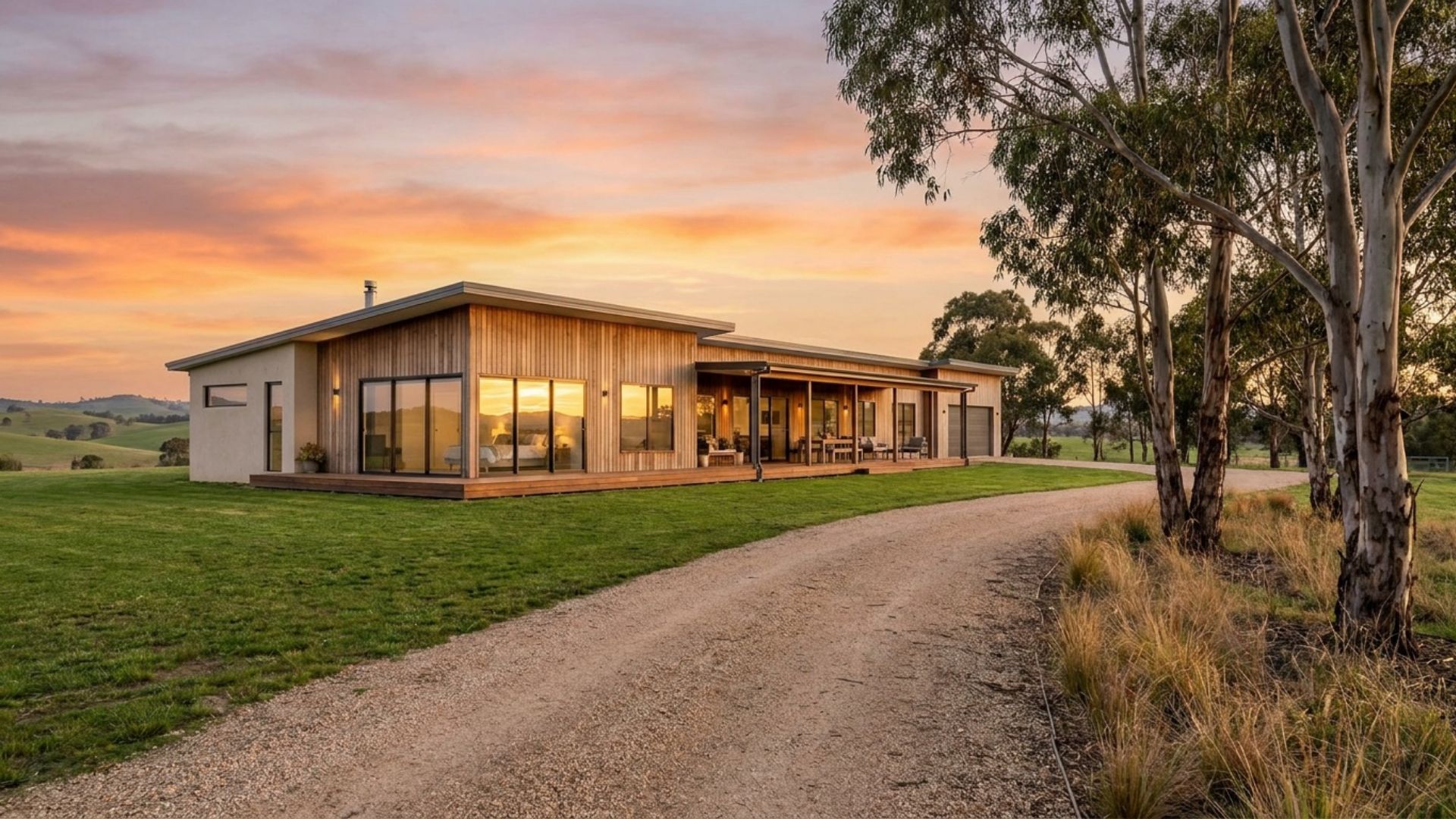
This is exactly the territory where Bluewood Homes’ Built To Requirement™ approach was built for. Rather than starting with a catalogue of set plans and asking a block to accommodate one, we start with the land, the orientation, the access and the way a family actually wants to live on it, then design around that. Building on acreage, that might mean a home that steps down a slope instead of requiring it to be cut flat, a layout that opens toward the view rather than the road, or a garage and driveway placed to suit the block’s natural access point. Our “On the House Inclusions” still apply as the strong standard you’d expect, but the design itself is shaped by your block and your brief — not the other way around.
Building on acreage blocks are notorious for hiding cost variables that only surface once a family is partway through the process — site works, wastewater systems, driveway length and bushfire construction requirements can all move the numbers meaningfully depending on the block. Rather than quoting a fixed figure before any of that is properly understood, we start every acreage enquiry with a free Core Feasibility Assessment. It’s a genuine, block-specific look at what your land and your brief actually involve, so you get honest cost clarity before you commit to a design or a contract — not a guess dressed up as a quote.
Families drawn to building on acreage living tend to gravitate toward a handful of areas on both sides of the border. On the Gold Coast, hinterland and semi-rural pockets around Currumbin Valley, Tallebudgera and the Mount Tamborine area remain popular for their combination of space and proximity to the coast. Around Brisbane, semi-rural suburbs such as Samford, Karana Downs and parts of the Scenic Rim offer similar appeal for families wanting room to move without leaving the region altogether. Each of these areas comes with its own mix of zoning, bushfire and services considerations, which is exactly why a site-specific design conversation matters more on acreage than almost anywhere else.
Building on acreage rewards a design that starts with the land, not a plan that hopes the land will cooperate. Whether you’re weighing up a hinterland block on the Gold Coast or a semi-rural pocket near Brisbane, the earlier your builder understands the site, the better the outcome — and the fewer surprises along the way. If you’re considering building on acreage, book a free Core Feasibility Assessment with our team and get an honest, block-specific read on what your build actually involves before you commit to anything.
PO Box 853
Oxenford Queensland, 4210
Tel: 0404981647
Building Licence: 1118245




© 2026 Bluewood Homes Gold Coast.


